16 of the Best Creative Journaling Ideas for You to Try


Find out how you can make your journaling experience more fun and interesting with these awesome creative journaling ideas.
These creative journaling ideas are the perfect way to express your thoughts and feelings.
Whether you’re looking for something to write in your spare time or something to use as a tool when you’re feeling stressed, there are plenty of creative ideas to choose from.
What is Creative Journaling?
Creative journaling is a form of expressive art that allows you to express yourself in a unique and personal way. It can include any number of materials, from pencil and paper to paint and collage.
The sky’s the limit when it comes to what you can use in your journal. The key is to let your creative juices flow and experiment with different techniques and mediums.
You can write about your day-to-day experiences, or you can use your journal as a place to experiment with new writing styles and techniques. You can also include drawings, sketches, and other forms of artwork.
One of the best things about creative journaling is that there are no rules. You can do whatever you want, whenever you want. There’s no need to worry about whether your work is “good” or not. The only thing that matters is that you’re expressing yourself creatively and exploring new ideas.
Another important thing about creative journaling is that it can be a very relaxing activity. It’s a great way to de-stress at the end of the day or to unwind before bedtime.
Creative journaling can provide many benefits for your mental health and emotional wellbeing. It can help you to process your thoughts and feelings, as well as to explore new ideas and possibilities.
Journaling can also help you to become more creative and productive in your work. Additionally, it can be a valuable tool for self-expression and self-discovery.
This blog post may contain affiliate links. If you click on a link and make a purchase I may receive a small commission at no extra cost to you
How to Start a Creative Journal?
Creative journaling is a great way to document your thoughts and ideas and is one of the most creative ways to express yourself. It can also help you to develop your creative writing skills. Here are some tips on how to start a creative journal:
– Choose the right type of journal. You want to choose a journal that is large enough for you to write comfortably in, but not so large that it will be overwhelming. A spiral-bound notebook or a journal with blank pages works well for this purpose.
– Start by brainstorming. Write down any ideas that come to mind, no matter how silly they may seem. This will help get the creative juices flowing and you can take these ideas further later on.
– Try out different styles. Draw, paint, collage, and write in your journal however you please. There is no wrong way to do this.
– Look for inspiration online, in magazines, or in your favorite books. Clip out inspiring images or write down quotes that speak to you.
– Finally, don’t be afraid to experiment. Try out new ideas and see what happens. You may surprise yourself with what you create!

12 Creative Journaling Ideas
A journal is the perfect place for your creative projects and there are no rules when it comes to journaling – the sky’s the limit. There are many different types of journals so if you’re looking for some inspiration to get you started, here are some creative journaling ideas to try.
Write About Music
A music journal is a great place to start. There are few things as cathartic as writing in a journal. Putting your thoughts and feelings down on paper can help you process them and make sense of them. And the same is true for music. Listening to your favourite songs can be a great way to express yourself and explore your emotions.
One way to use music in your journal is to write down the lyrics of your favourite songs. This can be a great way to capture how you’re feeling at a particular moment in time. It can also be a way to track your personal growth and development over time.
Another way is to create playlists for different moods or occasions. For example, you might have a playlist for when you’re feeling sad, happy, angry, or frustrated.
Make a Collage.
When it comes to journaling, there are a variety of ways to get creative and document your life. One fun option is to make a collage in your journal. This can be a great way to capture memories, moments, and favorite things.
To make a collage in your journal, start by finding some photos or images that you want to use. You can either print them out or find them online.
Once you have your images, cut them out and arrange them however you want on a blank page in your journal. You can use tape, glue, or staples to attach the images to the page.
When your collage is finished, write about what each image represents to you. Why did you choose those particular images? What do they mean to you? Writing about your collage can add another layer of meaning and significance to it.
Start a Gratitude Journal
Gratitude journaling is a great way to document the good in your life. When you take the time to write down the things you are grateful for, it can help shift your focus from the negative to the positive. It can also help you appreciate the small things in life that might normally go unnoticed.
A gratitude journal is a great way to get started with creative journaling. It can be as simple as writing down three things you are grateful for each day. You can get super creative with it, too—write poems, draw pictures, or make lists of things you’re grateful for. The important thing is to find what works best for you and stick with it.
Bullet Journaling
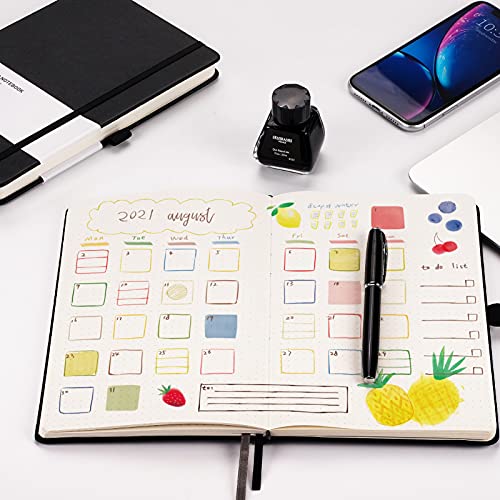
A bullet journal is a common type of creative journal that is fully customisable. It is perfect for anyone who wants to keep track of their life, but doesn’t want the same old boring journal. With bullet journaling, you can create spreads, journal pages and journal entries that are unique to you and your needs. You can also use it as a way to improve your writing skills, by practicing daily journaling.
When it comes to bullet journaling, there are no set rules. You can make it as simple or as complex as you want, and you can change it up however you please.
The first step is to choose the right journal. You’ll want something with a blank or lined pages, and it’s best if it’s small enough to fit in your pocket or purse. You can find a variety of journals specifically designed for bullet journaling, but any notebook will do.
Once you have your journal, the next step is to create your index. This is simply a table of contents that will list all of the topics and pages in your journal.
You can track all kinds of things in your bullet journal:
– Your mood: This can be done by tracking the weather, your activities, or how you’re feeling mentally and emotionally.
– Your routine: This could include things like what time you wake up/go to bed, what you eat for breakfast, what workouts you do, etc.
– Your goals: Whether they’re personal or professional goals, it’s helpful to track them in some way so that you can see your progress over time.
– Track your habits. This will help you see which habits need to be changed.
– You can track your expenses and income. This will help you stay on budget and save money.
16 of the Best Creative Journaling Ideas for You to Try
Write a Letter to Your Future Self
It can be really fun to write a letter to your future self. What would you say? How would you feel? What would you want to tell yourself? You could even include some pictures.
Writing in a journal is a great way to do this. It’s like having a conversation with yourself, and it can be really helpful in figuring out what you want in life.
Think about what you’d want to tell yourself in the future. Maybe you want to update yourself on your current goals and plans, or share some advice that you’ve learned along the way.
Whatever you choose to write, make sure it’s something that will inspire and motivate you.
Create a Mood Board
If you’re looking for a fun way to get creative, try creating a mood board in your journal. A mood board is a collection of images, words, and other objects that represent how you’re feeling or what you want to achieve. You can create one for every day, or just when you need some inspiration.
To make a mood board, start by finding some pictures or quotes online that resonate with you. Print them out or save them to your phone, and then find a spot in your journal to stick them.
You can also use magazines, stickers, or other objects to create a more tactile experience. Once you’ve got your materials together, it’s time to get creative. Try arranging the images and words in any way that feels right to you.
Write a Short Story
When most people think of journaling, they think of a traditional journal entry like writing about their day-to-day activities. But you can also use your journal to write short stories. This is a great way to practice your creative writing skills and to come up with new ideas for stories.
The best way to start is by coming up with a plot or main idea for a story. Then, you can brainstorm characters and setting, and start writing the story. don’t worry if it’s not perfect – you can always go back and revise it later.
Your journal is a great place to experiment with different writing styles and techniques. You might want to try writing in different points of view, or using dialogue. The key is to have fun and let your creativity flow!
Draw a Mind Map
When you have an idea, it’s important to capture it in some way so you don’t forget it. One way to do this is by drawing a mind map of the idea. This will help you visualize the idea and see how it’s related to other ideas. When you’re done, you can write out a more detailed description of the idea in your journal.
Here are the steps to drawing a mind map:
1. Draw a circle in the centre of your paper and label it with your topic or idea.
2. Draw branches from the centre circle and write down everything that comes to mind about your topic.
3. Connect related ideas with lines.
4. Use keywords and symbols to further organize your thoughts.
5. Repeat steps 2-4 as needed.
Travel Journaling

When you’re on a trip, it can be fun to keep a travel journal. This is a place where you can write down your thoughts, impressions and memories of the trip.
When beginning a travel journal, the most important thing is to be creative and make it your own. There are no set rules, so let your imagination run wild! Some people like to write about their day-to-day experiences, while others prefer to focus on their thoughts and feelings throughout the journey. It’s up to you how personal you want to get.
Another key element of a great travel journal is photos. Be sure to take plenty of pictures and document your journey through images as well as words. This will help bring your memories back vividly when you look back through your journal later on.
Things That Inspire You
Making a list of things that inspire you is a great way to start your day. It can help you focus on the positive and put you in a good mood. Some things that might inspire you are your family, friends, pets, nature, music, art, and travelling.
All of these things can put a smile on your face and make you feel good. If you’re having a bad day, take some time to reflect on the things that inspire you and it will hopefully help turn your day around.
You can also use your journal to write inspirational quotes that will help motivate and encourage you. Here are a few tips for getting started:
1.Do you have a favorite quote? Start by looking for quotes that resonate with you or that make you feel inspired.
2. Write the quote out in its entirety, or just the main message if it’s a longer quote.
3. Add your own thoughts or reflections about the quote.
Paste in Ephemera
One way to make your journal unique is to use ephemera.
Ephemera is anything that is not typically meant to be permanent, such as tickets, postcards, or brochures. You can find ephemera in many places, such as flea markets, antique stores, or online.
Adding ephemera to your journal can add visual interest and help you to capture memories from different parts of your life. For example, if you went on a trip, you could include a ticket or brochure from the destination. If you went to a concert, you could include a ticket stub or a program from the show.
Some ideas for using ephemera in your journaling are:
-Collect small objects such as leaves, flowers, sticks, stones, etc. and glue them into your journal.
-Cut out images from magazines or newspapers and paste them into your journal.
-Write about a special event or memory and include related ephemera such as tickets, menus, postcards, etc.
If you’re looking for vintage ephemera to add to your journal, there are a few places you can start. One option is to look online for printables. There are a number of websites that offer free or paid downloads of vintage ephemera. Another option is to search through old books and magazines at thrift stores or garage sales.
Try a 30-Day Challenge
If you’re looking for a way to jumpstart your journaling habit, try doing a 30-day challenge. This is a great way to push yourself to commit to journaling every day for a month.
You can set any goal you want for the challenge, such as writing in your journal for 10 minutes each day or writing about a different topic each day.
The great thing about these challenges is that it’s completely customizable. You can make it as easy or as challenging as you want. And if you find that you’re struggling to keep up with your daily goals, don’t worry – there’s no shame in falling behind! Just pick up where you left off and keep going.
At the end of the 30 days, take some time to reflect on your experience. What did you like about the challenge? What didn’t work for you?
If you need some inspiration you can try one of these challenges.
30-day journaling challenge for healing and transformation
30 Day Journaling Challenge: Become A Self Love Baddie
The Ultimate 30-Day Journal Challenge

Use Journal Prompts for Inspiration
Journal writing prompts can help you get unstuck when you’re feeling creatively blocked, or when you want to reflect on your life but don’t know where to start.
Prompts can also help you document your thoughts and feelings as you go through a difficult time, or as you experience a major life change.
If you’re not sure where to start, try these creative journal prompts:
- Draw or paint a picture inspired by your current mood.
- Write a poem about a place that’s special to you.
- Create a mixed-media collage about a happy memory.
- Write about an experience that made you feel brave.
- Draw or paint a portrait of someone you love.
- Create a list of things you’re grateful for.
- Write a story about a time when you defied expectations.
- Jot down a stream of consciousness entry about what’s going on in your life right now.
- Write about a time when you were really proud of yourself.
- Draw or paint a portrait of your best friend.
Keep a Reading Journal
Reading journals are a great way to keep track of the books you read and to reflect on them. They can also help you keep track of what you’re reading, when you read it, and where you read it. Here are a few tips for keeping a reading journal:
1. Choose a format that works for you. You can keep a physical journal, or you can use an online tool or app.
2. Record the title of the book, the author, the date you started reading it, and the date you finished it.
3. Write down your thoughts about the book. What did you like or dislike about it? Was it what you expected? Would you recommend it to others?
4. Keep track of where and when you read the book. Did you listen to it as an audiobook?
5. Write down your favourite quotes and passages from the book. Write about your favourite characters. What do you think happened to them next?
Try Art Journaling

There’s no need to be an artist to enjoy art journaling. It is simply a tool to process your thoughts and feeling in a visual way. In fact, many people find the process of art journaling to be more about the therapeutic act of writing, drawing, and collaging than it is about the final product.
To start your own art journal, you’ll need a blank book (or a few), some pens or pencils, and whatever else you want to use to create images and designs in your journal (markers, paints, crayons, stickers, etc.).
The great thing about art journaling is that there are no rules. Just start by writing down your thoughts or feelings for the day, or by creating some sketches or designs. If you get stuck, take a look online for inspiration – there are thousands of amazing art journals out there just waiting to be explored.
Lists
Keeping a journal is a great way to document your thoughts and feelings. It can also be a helpful tool for organizing your ideas. One way to make journaling more effective is to write lists in your journal.
List-writing can help you clarify your thoughts and organise your ideas. When you write a list, you are forced to focus on the individual items and come up with concise points. This can be especially helpful when you are trying to come up with a plan or brainstorm new ideas.
Lists can also be a great way to track progress. You can use lists to track goals that you have set for yourself, or the progress you are making on specific tasks. This type of tracking can help keep you motivated and on track.
Writing lists in your journal can be a fun way to keep track of your life.
There are plenty of lists that can help you get the most out of your journaling habit. Here are a few to get you started:
– Make a list of things you’re grateful for. This is a great way to start your day on a positive note and can help you focus on the good things in your life.
– Make a list of goals for yourself. This can help keep you motivated and focused on what you want to achieve.
– Make a list of things you want to remember. This can be anything from memorable moments from your day to ideas for future projects.
– Make a list of questions you want to answer in your journal. This can help guide your writing and give you topics to explore further.
– Make a list of things you want to accomplish in the next week or month. This will help you stay organised and productive.
– Music, TV or film list. A list of 5 books that have influenced you in some way. The top 10 songs that remind you of your childhood.
Creative journaling is a great way to express yourself, document your life, and boost your creativity.
It can be a fun and rewarding activity for people of all ages and you will soon find that it is the perfect creative outlet. If you’re looking for some creative journaling ideas to get started, I hope this article has given you some inspiration.
So go for it and have fun.


