50 Journal Prompts for Anxiety to Calm Your Mind


Journaling has long been known as a way to communicate and explore your thoughts and feelings. Here are some journal prompts for anxiety to get you started.
Anxiety is a common problem that can be addressed in a healthy way by using journal prompts.
Journal prompts can help to provide relief from anxiety by giving you a safe and constructive way to express your feelings.
100 Mental Health Journal Prompts PDF Available Here.
What is Anxiety?
Anxiety is a feeling of unease, such as worry or fear, that can be mild or severe. For some people, anxiety is a normal reaction to stress. But for others, anxiety can become a problem that disrupts daily life.
People with anxiety disorders have anxious thoughts and feelings of fear or worry that are out of proportion to the situation. They may have an anxiety attack, which is an intense experience of fear or terror.
They may also avoid certain situations or activities because they are afraid of having anxiety attacks. Anxiety disorder is the most common mental illness in the United States.
This blog post may contain affiliate links. If you click on a link and make a purchase I may receive a small commission at no extra cost to you
The Causes and Symptoms of Anxiety
Everyone experiences anxiety at some point in their life. For example, you may feel anxious before an important meeting or when you are waiting for a test result.
However, if you experience these feelings often and they are interfering with your daily life, you may have an anxiety disorder.
There are many things that can cause anxiety, including stress at work or school, money problems, health concerns, and relationship issues.
Sometimes people experience anxious thoughts even though there’s no clear reason for them. This is called Generalized Anxiety Disorder (GAD).
There are many symptoms of anxiety. Some people have anxious thoughts, which are thoughts that go over and over in their heads and make them feel worried or nervous. These thoughts can be intrusive and make it hard to focus on anything else.
People with anxiety disorders often also feel a sense of dread or apprehension and have difficulty controlling their worries.
They may also experience physical symptoms such as chest pain, rapid heart rate, sweating, shortness of breath, dizziness, and trembling.
People with anxiety may also feel constantly on edge or like they’re waiting for something bad to happen. They may have trouble sleeping or experience stomach problems or headaches as a result of their anxiety.

How Can You Reduce Anxiety?
While there is no one-size-fits-all answer to reducing anxiety, here are some general tips that may help:
– Identify your triggers. Knowing what sets off your anxious thoughts can help you manage them more effectively.- Avoid caffeine and alcohol. Caffeine and alcohol can both increase feelings of anxiety.
– Get regular exercise. Exercise releases endorphins, which have mood-boosting effects and can help reduce feelings of anxiety.
– Eat a healthy diet filled with fruits and vegetables. Processed foods and sugars can aggravate feelings of anxiety.
– Make time for yourself each day to relax and unwind. This can be something as simple as reading a book, or taking a bath.
– Practice relaxation techniques. Deep breathing exercises, yoga, or meditation can help promote a sense of calmness and relaxation.
– Seek professional help if needed. Therapy can help you to understand and manage your anxiety disorder. Medication can help to relieve symptoms of anxiety by altering the brain’s chemistry.
50 Journal Prompts for Anxiety to Calm Your Mind
How Journaling Can Help Anxiety
While there are many effective treatments for anxiety, such as therapy and medication, you can also find relief from anxiety by journaling.
When you’re anxious, your mind races and you might not be able to focus on anything else. Journaling can help by giving you a safe place to express your thoughts and feelings.
It also helps you to slow down and focus on the present moment. When you’re focused on writing instead of your worries, you’ll find that your anxiety decreases.
Journaling also helps you to track your progress over time. As you document your thoughts and feelings, you’ll start to see patterns emerge. This can be helpful in figuring out what triggers your anxiety and helping you to develop strategies to deal with those triggers.
The Benefits of Journaling
When it comes to organizing and sorting through your thoughts, few things are as helpful as journaling. Most people think of journaling as a way to record what happened during the day, but there are many other benefits to keeping a journal.
– Journaling is a powerful tool to improve your mental health. It can be an effective way to deal with anxiety, depression, and other mental health issues. It can also help you manage stress levels and improve your mood overall.
– It allows you to track your progress over time. You can look back and see how far you’ve come, both mentally and physically. This is especially beneficial if you’re working on changing or improving yourself in some way.
– Journaling can help you become more self-aware. When you document your thoughts and actions, you can better understand your own motivations and behavior patterns. This knowledge can then help you make positive changes in your life.
– It can help boost your creativity. If you’re feeling stuck creatively, taking some time to journal may help get the ideas flowing again.
– Journaling is a great way to process emotions. If you’re feeling overwhelmed or stressed, writing about your feelings can help to ease that tension and make you feel better.
– Writing in a journal is a great way to reflect on your life and accomplishments. It can be really rewarding to look back on old journals and see how far you have come.
– You can process events and experiences. Journal writing helps you make sense of things that have happened and gives you a way to track your personal growth over time.
– Journaling can help you to connect with your inner voice. Journaling can help you access insights and wisdom that might be hidden from view otherwise.
100 Mental Health Journal Prompts PDF Available Here.
Tips for Journaling for Anxiety
Here are some tips for journaling when you’re struggling with anxiety:
– Choose the right medium. There are many different ways to keep a journal, so find one that works best for you. Some people prefer to write in a notebook or journal like this one, while others prefer to use an electronic device or app.
– Make time for it every day. Journaling should be a regular part of your routine and be done on a daily basis, just like brushing your teeth or taking a shower. Dedicate a specific time each day to sit down and write.
– Choose a time and place that works for you. Some people prefer to journal first thing in the morning, while others find evening is a better time. Figure out what works best for you and stick to it. As for where, find a spot that is quiet and comfortable for you.
– Start with something positive. The most important thing is to begin your journaling session on a positive note. Write about something that made you happy today, reflect on something that went well yesterday or write about the good things that have happened in the past few weeks.
– Don’t worry about grammar or spelling – just let everything flow onto the page. If you find yourself getting stuck, try focusing on one specific event or issue from the day or use writing prompts for inspiration.
– As you write, don’t be afraid to explore your thoughts and feelings in more depth. Go back and read what you wrote later on, and see if there are any insights or lessons that you can glean from it.
– Be honest with yourself. Be truthful and open in your journaling, and you will find that it is helpful for reducing stress levels. Don’t censor yourself. If something comes into your head, write it down. You need complete honesty if you are looking to make a positive change.
Before we get to the prompts I just want to tell you a bit about the Let It Go printable journal. As an anxiety sufferer, I used to have a million thoughts going around in my head. There were so many thoughts I couldn’t make sense of any of them. I could never switch off and just be.
That all changed when I discovered journaling. Getting everything out and onto paper using the simple but powerful techniques in this journal really helped to clear my mind.

Is This You?
- You are stressed and overwhelmed. You have a lot of things on your mind, and you don’t know how to let them go.
- Your mind is racing with thoughts about what you need to do, what has happened and what could happen.
- You want to get rid of all the negative thoughts that are preventing you from living your life and achieving your goals.
Use the Let It Go Journal to get clarity of mind and lose that mental clutter. You will be able to focus on the most important things in life.
What if just a few minutes of journaling at night could give you a calm restful sleep?
What if you could go to work with a clear head and focus on the task at hand?
The techniques in this journal are really easy to implement. Imagine being able to focus and enjoy life without all of that mental clutter.
You can check out the journal here.
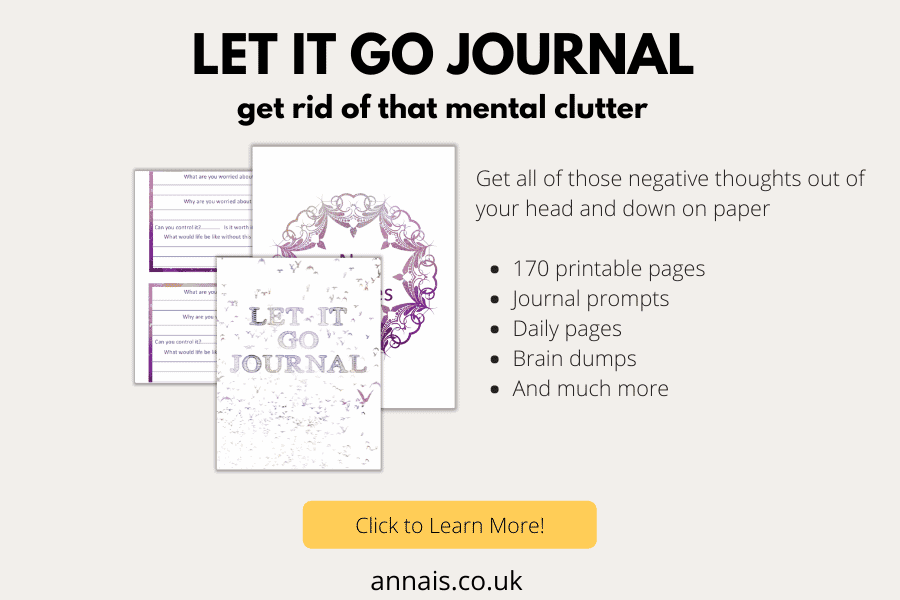
What You Get:
- 170-Page Printable Journal
- Daily Pages
- Journal Prompts
- No Worries Pages
- Brain Dump Pages
- Random Thoughts Pages
- Rant Pages
- Print out as many pages as you need
This is a journal for your soul. It is jam-packed with straightforward journaling techniques designed to help you calm your mind, find clarity and focus on what matters most to you.
Bring about significant change with the Let It Go Journal. You deserve to let it go and feel good about yourself, it’s so simple so why not start today?
If you hurry and check it out now you can use the code LETGO30 to get a 30% discount.
50 Journal Prompts for Anxiety

Journaling is a great way to deal with anxiety. It allows you to take a closer look at what is going on in your mind and to express your thoughts and feelings in a safe, private space. It can also help you identify negative thoughts and patterns of thinking that contribute to your anxiety.
Here is a list of journal prompts for anxiety to help to get you started:
- What are the things that trigger your anxiety? Triggers are things that set off your anxiety symptoms. Make a list of them and try to understand why they distress you so much. Think about how you can avoid or deal with them.
- What thoughts and feelings go through your mind when you are anxious?
- What are your coping mechanisms for dealing with anxiety? Write down as many as you can and try to use them when you feel anxious.
- What have you done in the past to help you to cope with your anxiety?
- Are there any people or situations that make you feel especially anxious? What or who are they? Why do they make you feel this way?
- What do you think could be causing your anxiety?
- How does anxiety affect your daily life? How does it disrupt your daily routine? What is the best way to deal with this disruption?
- What can you do in the future to cope with your anxiety?
- When was the last time you felt really good and free of anxiety?
- What would happen if you stopped letting anxiety control your life?
- Do you have a good support network? Who do you trust and turn to for support when you are having a difficult time? Are there any people in your life who have been supportive of your journey with anxiety? How have they helped?
- What were you doing when you felt the most anxious today? What thoughts were going through your head at the time? What physical sensations did you feel? What strategies did you use to cope? How well did those strategies work for you?
- What relaxation techniques have helped you to manage your anxiety in the past?
- What are your thoughts on using medication or therapy to treat your anxiety? If you are currently using these treatments or have tried them in the past, write about your experience with them.
- What does a “good day” look like for you when it comes to managing your anxiety?
- What are the things that make you feel the most anxious? Try to identify the situations or events that cause your anxiety to spike.
- How do you feel after writing your journal entries? Is it helping with your anxiety issues?
- What would you like to change about how you are dealing with your anxiety?
- Are there any foods, drinks, or activities that make your anxiety worse?
- What would you like to work on most to manage your anxiety?
100 Mental Health Journal Prompts PDF Available Here.
- Can you identify any patterns in your experience with anxiety?
- What do you think about yourself when you’re feeling anxious? Do any negative thoughts tend to crop up? If so, challenge those thoughts and try to replace them with more positive ones.
- How is your physical health? What are the physical symptoms of your anxiety?
- What are you grateful for in your life? Starting a gratitude journal can be beneficial for anxiety disorders. This can help shift your focus away from the things that are causing you anxiety and onto the positive aspects of your life.
- What is causing your anxiety right now? Make a list of all the things that are bothering you and try to rank them in order of importance. What could you do to address some of the items on your anxiety list? This question can be difficult, but it’s important to start taking steps toward resolving your issues.
- What is your biggest fear? Why is it scary for you?
- What makes you happy? Make a list of the things that make you happy and try to do more of them.
- What’s your typical day like? Are there any specific times of day when you feel more anxious?
- What’s the worst thing that could happen if you experienced anxiety in a particular situation?
- How do you envision your future self without anxiety?

- It’s important to focus on the positive things in life. What was your favourite moment from today? What are you looking forward to tomorrow? What made you laugh today?
- Write about your best friend? Why do you consider them your best friend? How have they helped you through tough times? Do they help with your anxiety? How do you feel when you spend time with them? What are your favourite memories with your best friend? What stands out about those memories?
- Write a list of all the things you are proud of. What are your greatest accomplishments?
- What brings you peace? What peaceful moments did you experience today?
- Write about the last time you did something kind or compassionate.
- What are your top 5 positive qualities?
- How do you feel after intentionally reducing your anxiety in a difficult situation?
- What would it mean for you to be free from anxiety altogether?
- Write a list of goals for dealing with your anxiety. Make a plan for how you are going to achieve them.
- What do you think is the root cause of your anxiety?
- Are there any people or groups of people that trigger your anxiety?
- How do you deal with difficult emotions and thoughts related to your anxiety?
- Write about the successes you have had in managing your anxiety?
- What are your worst fears? Write about what they are and why they scare you.
- Do you practice self-care? Write a list of self-care activities you would enjoy.
- Is there anything you need to let go of in order to reduce your anxiety?
- Do you think there’s a link between anxiety and perfectionism? If so, how do you deal with that link?
- What is your favourite memory of when you were feeling happy and anxiety-free? What made it so special?
- Make a list of your top 5 worries and why they worry you. Are any of them realistic or justified, or are they simply irrational fears?
- Do you spend a lot of time on social media? Do you think this contributes to your anxiety? Why do you think this is?
Journal prompts can be a helpful way to deal with anxiety. They can help you identify and understand your triggers and develop strategies for managing your anxious thoughts. If you are struggling, give these journal prompts for anxiety a try.


